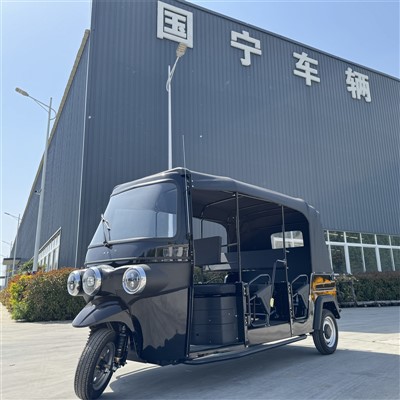

Hey there! As a supplier of six - seater tricycles, I often get asked about the price difference between gas and electric six - seater tricycles. It's a hot topic, and today, I'm gonna break it down for you.
Let's start with the basics. Gas - powered six - seater tricycles have been around for a while. They're known for their power and long - distance capabilities. These tricycles are like the workhorses of the transportation world. They can carry a full load of six passengers and their luggage without much of a struggle. The engine in a gas tricycle is usually a small combustion engine, similar to what you'd find in a motorcycle or a small car.
On the other hand, electric six - seater tricycles are the new kids on the block. They're powered by a battery, which makes them much quieter and more eco - friendly. Electric tricycles are great for short - to medium - distance trips, especially in urban areas where you don't need to go too far. They're also a lot easier to maintain compared to their gas counterparts.
Now, let's talk about the price. The price of a six - seater tricycle can vary greatly depending on a bunch of factors, like brand, features, and of course, whether it's gas or electric.
Gas six - seater tricycles generally have a lower upfront cost. This is because the technology behind gas engines is well - established and the components are relatively inexpensive to manufacture. You can find a basic gas six - seater tricycle for a decent price. However, it's important to consider the long - term costs. Gas is expensive, and the more you use your tricycle, the more you'll spend on fuel. Also, gas engines require regular maintenance, like oil changes, spark plug replacements, and tune - ups. All these maintenance costs can add up over time.
Electric six - seater tricycles, on the other hand, usually have a higher upfront cost. The batteries and the electric motor technology are more expensive to produce. But here's the thing: the long - term costs are much lower. Electricity is generally cheaper than gas, and the maintenance requirements for electric tricycles are minimal. You don't have to worry about oil changes or spark plug replacements. All you really need to do is keep the battery charged and in good condition.
Let's take a closer look at some of the features that can affect the price of both types of tricycles.
Features and Their Impact on Price
1. Build Quality
A high - quality six - seater tricycle, whether gas or electric, is going to cost more. This includes the frame material, the quality of the seats, and the overall construction. For example, tricycles with a sturdy steel frame are more durable and reliable than those made with cheaper materials. If you're looking for a High Quality Adult Electric Tricycle, you can expect to pay a bit more, but it'll be worth it in the long run.
2. Suspension
Tricycles with better suspension systems provide a smoother ride. An Independent Suspension Tricycle can handle bumps and rough roads much better than a tricycle with a simple suspension. This feature usually comes at a higher price, but it can greatly enhance the comfort and safety of your passengers.
3. Performance
High - performance tricycles, like the High Performance Passenger Tricycle, are designed to go faster and carry heavier loads. These tricycles often have more powerful engines (in the case of gas tricycles) or larger batteries (for electric tricycles). Naturally, the better the performance, the higher the price.
Real - World Price Comparison
To give you a better idea of the price difference, let's look at some ballpark figures. A basic gas six - seater tricycle can cost anywhere from $3000 to $5000. This is a good option if you're on a tight budget and need a tricycle for short - distance, low - frequency use.
On the other hand, a basic electric six - seater tricycle might start at around $5000 and can go up to $10,000 or more for high - end models. The higher - end electric tricycles usually come with advanced features like longer battery life, better suspension, and more comfortable seating.
When you factor in the long - term costs, the picture gets a bit more interesting. Let's assume you drive your tricycle 100 miles a week. A gas tricycle might cost you around $10 - $15 a week on fuel, depending on the gas price and the tricycle's fuel efficiency. Over a year, that's about $520 - $780. And don't forget the maintenance costs, which could be another $200 - $300 a year.
An electric tricycle, on the other hand, might cost you only $2 - $3 a week on electricity. That's about $104 - $156 a year. And with minimal maintenance, you're looking at a much lower overall cost in the long run.
Which One Should You Choose?
The choice between a gas and an electric six - seater tricycle really depends on your needs. If you need a tricycle for long - distance trips or heavy - duty use, a gas tricycle might be the better option. It has the power and range to get the job done.
But if you're mostly using the tricycle in an urban area for short trips, an electric tricycle is a great choice. It's eco - friendly, quiet, and cost - effective in the long run.
Let's Talk Business
If you're in the market for a six - seater tricycle, whether it's gas or electric, I'd love to talk to you. As a supplier, I can offer you a wide range of options to suit your needs and budget. Whether you're a tour operator looking for a reliable tricycle to transport your customers or an individual looking for a fun way to get around with your friends and family, I've got you covered.


Don't hesitate to reach out if you have any questions or if you're ready to discuss your purchasing options. I'm here to help you make the best decision for your situation.
References
- General knowledge about tricycle technology and pricing trends.
- Industry reports on the cost of gas and electric vehicles.