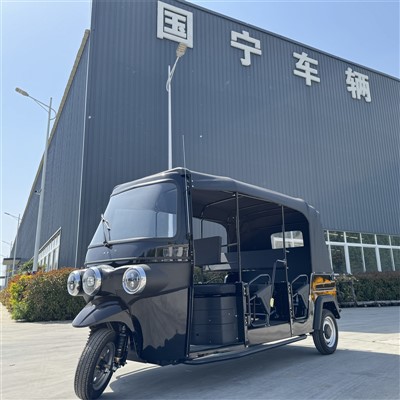

As a supplier of transport tricycles, I often get asked about the difference between a regular tricycle and a transport tricycle. It's a fair question, and one that I'm happy to answer. In this blog post, I'll break down the key differences between the two, so you can make an informed decision when it comes to choosing the right tricycle for your needs.
Design and Structure
Let's start with the design and structure. A regular tricycle, the kind you might see a kid pedaling around the neighborhood, is built for simple, personal use. It usually has a small, lightweight frame, with two wheels at the back and one at the front. The seat is typically designed for one person, and there's not much in the way of storage space. It's all about easy maneuverability and fun.


On the other hand, a transport tricycle is a whole different beast. These are designed with functionality and practicality in mind. They often have a much larger and sturdier frame to handle heavier loads. The storage area is a major distinguishing factor. Transport tricycles come with big cargo boxes or platforms where you can load up all kinds of stuff, like groceries, tools, or even small furniture. Some transport tricycles also have a cab to protect the rider from the elements. Check out our Freight Tricycle with Cab for an example of this kind of design.
Purpose and Use
The purpose of a regular tricycle is mainly for recreation or short - distance personal transportation. Kids use them to learn how to balance and have a blast in the park. Adults might use them for a leisurely ride around the block or for a short trip to the local store.
Transport tricycles, however, are workhorses. They're used for a wide range of commercial and logistic purposes. Delivery services love them because they can navigate through traffic easily, even in crowded urban areas. Street vendors use them to transport their goods from one place to another. In some rural areas, they're used to carry farm produce to the market. They're a cost - effective and eco - friendly alternative to larger vehicles for short - to medium - distance transportation. If you're in the business of moving goods, our Guoning 1.5m Freight Tricycle could be a great option.
Power and Propulsion
Regular tricycles are usually human - powered. You pedal to make them move, which is great for getting some exercise. It also means they're super quiet and zero - emissions, but they can be a bit of a challenge if you're going uphill or need to cover long distances.
Transport tricycles come in a variety of power options. You can still get pedal - powered ones, which are great for short trips and small loads. But a lot of transport tricycles are electric - powered. Electric tricycles have a battery that powers an electric motor, giving you an extra boost. They're much more efficient for carrying heavy loads and can cover longer distances without wearing you out. We also offer Electric Small Truck options if you're looking for more power and capacity.
Safety Features
When it comes to safety, both regular and transport tricycles have their own features. Regular tricycles often come with basic safety features like reflectors and a simple braking system. Since they're usually used at low speeds in safe environments, that's often enough.
Transport tricycles, due to their commercial use and potentially higher speeds, have more advanced safety features. They usually have better braking systems to handle the extra weight. Some also come with lights, turn signals, and mirrors, just like a regular vehicle. This makes them safer to use on busy roads, especially when you're carrying valuable cargo.
Maneuverability and Handling
Regular tricycles are incredibly easy to maneuver. Their small size and lightweight design mean you can turn on a dime and navigate through tight spaces. They're perfect for weaving in and out of obstacles in a park or a small alleyway.
Transport tricycles, while still relatively maneuverable, are a bit more cumbersome due to their larger size and heavier load capacity. However, they're designed with stability in mind. The wider wheelbase and lower center of gravity make them less likely to tip over, even when fully loaded. This makes them a reliable option for transporting goods in a variety of environments.
Cost and Maintenance
In terms of cost, regular tricycles are generally much cheaper. They're simple to manufacture, and you can find a basic model for a relatively low price. Maintenance is also fairly straightforward. You might need to replace the tires every now and then, and give the chain a bit of lubrication, but that's about it.
Transport tricycles, as you might expect, are more expensive. Their larger size, more complex design, and additional features all contribute to a higher price tag. But when you consider the amount of work they can do, the cost is often justified. Maintenance can also be a bit more involved, especially for electric models. You'll need to keep an eye on the battery life, the motor, and the braking system. However, if you take good care of your transport tricycle, it can last for many years, providing a great return on your investment.
Conclusion
So, there you have it – the main differences between a regular tricycle and a transport tricycle. Whether you're looking for a fun way to get around or a reliable vehicle for your business, understanding these differences is crucial. If you're in the market for a transport tricycle, we've got a wide range of options to suit your needs. Our vehicles are built with quality and durability in mind, and we're confident that you'll find the perfect fit for your operation.
If you're interested in learning more about our transport tricycles or have any questions about which model would be best for you, don't hesitate to reach out. We're here to help you make the right choice and get the most out of your investment. Let's start a conversation about how our transport tricycles can benefit your business.
References
- General knowledge on tricycle design and functionality
- Industry experience as a transport tricycle supplier