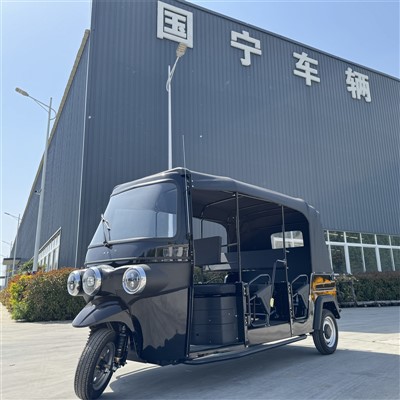

As a supplier of Automatic Unloading Tricycles, I've seen firsthand how the weight of the load can significantly impact the performance of these nifty vehicles. In this blog, I'm gonna break down the various ways load weight affects an Automatic Unloading Tricycle and share some insights based on my experience in the industry.
Power and Speed
One of the most obvious ways load weight affects an Automatic Unloading Tricycle is its power and speed. When you load up a tricycle with a heavy cargo, it puts more strain on the motor and the overall system. The motor has to work harder to move the extra weight, which can lead to a decrease in speed.
For instance, if you've got a lightly loaded tricycle, it can zip around the delivery area at a decent pace, getting the job done quickly. But when you pile on a heavy load, say, close to the tricycle's maximum capacity, you'll notice that it takes longer to accelerate and reaches a lower top speed. This can be a real pain, especially if you're on a tight schedule or need to make multiple stops in a short period.
The type of terrain also plays a big role here. On flat, smooth surfaces, a heavier load might just slow the tricycle down a bit. But on hilly or uneven ground, the impact of the load weight becomes even more pronounced. The tricycle might struggle to climb hills or even stall if the load is too heavy. This is why it's crucial to consider the terrain when planning your routes and deciding how much to load onto the tricycle.
Battery Life
Another major factor affected by the load weight is the battery life. The battery is the heart of an Automatic Unloading Tricycle, providing the power needed to run the motor and all the other components. When you increase the load weight, the battery has to supply more energy to move the tricycle, which means it drains faster.
Let's say you've got a fully charged battery and you're using the tricycle for light deliveries. You might be able to make a few rounds without any issues. But if you load it up with a heavy load, the battery might run out of juice much sooner. This can be a real problem, especially if you're in the middle of a delivery route and don't have a convenient place to recharge.
To mitigate this issue, it's important to manage your load weight carefully. Try to distribute the weight evenly across the tricycle to reduce the strain on the battery. You can also consider investing in a higher-capacity battery if you regularly carry heavy loads. However, keep in mind that a higher-capacity battery might be more expensive and heavier itself, which can further impact the tricycle's performance.
Handling and Maneuverability
The weight of the load can also have a significant impact on the handling and maneuverability of an Automatic Unloading Tricycle. A heavy load can make the tricycle more difficult to steer, especially at low speeds or when making tight turns. It can also affect the balance of the tricycle, making it more prone to tipping over.
For example, if you're trying to navigate a narrow alleyway or a crowded marketplace, a heavily loaded tricycle can be a real handful. You might have to use more force to turn the handlebars, and there's a greater risk of hitting something or losing control. This is why it's important to be extra cautious when operating a tricycle with a heavy load.


To improve handling and maneuverability, you can adjust the suspension and tire pressure of the tricycle. A properly adjusted suspension can help absorb the shock of the load and keep the tricycle stable. And the right tire pressure can provide better traction and make it easier to steer.
Unloading Performance
Of course, the main selling point of an Automatic Unloading Tricycle is its ability to unload the cargo quickly and efficiently. But the weight of the load can also affect this aspect of the tricycle's performance. A heavy load might require more power to lift and unload, which can put more strain on the unloading mechanism.
If the unloading mechanism isn't designed to handle heavy loads, it might malfunction or break down over time. This can lead to costly repairs and downtime, which is the last thing you want when you're trying to run a successful delivery business.
To ensure smooth unloading performance, it's important to choose an Automatic Unloading Tricycle that's rated for the maximum load weight you expect to carry. You should also follow the manufacturer's guidelines for maintenance and operation to keep the unloading mechanism in good working condition.
Conclusion
In conclusion, the weight of the load has a significant impact on the performance of an Automatic Unloading Tricycle. It affects power and speed, battery life, handling and maneuverability, and unloading performance. As a supplier, I always recommend that my customers carefully consider their load requirements when choosing a tricycle.
If you're in the market for an Automatic Unloading Tricycle, I've got a great range of options to suit your needs. Whether you need a Air Conditioned Tricycle for those hot summer days or a Freight Big Three Wheels for heavy-duty deliveries, I've got you covered. And if you're looking for something a bit more compact, the Guoning 1.5m Freight Tricycle is a great choice.
If you're interested in learning more about our Automatic Unloading Tricycles or have any questions about load weight and performance, don't hesitate to reach out. I'm always happy to help you find the perfect tricycle for your business. Let's have a chat and see how we can work together to improve your delivery operations.
References
- Industry reports on electric tricycle performance
- Manufacturer's specifications for Automatic Unloading Tricycles
- Personal experience and observations as a supplier of Automatic Unloading Tricycles