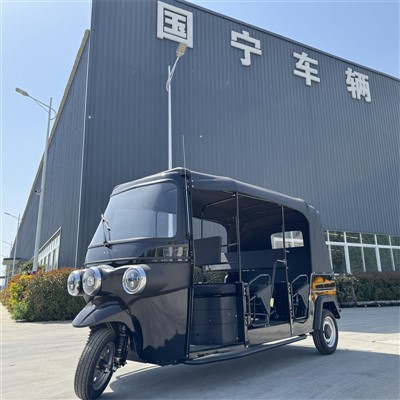

In the bustling world of urban commerce, food delivery has emerged as a booming industry, driven by the convenience it offers to consumers and the entrepreneurial opportunities it presents to businesses. As a supplier of the 2.0m Cargo Tricycle, I often find myself in conversations with potential clients about the suitability of our tricycles for food delivery services. In this blog post, I will delve into the various aspects of using a 2.0m cargo tricycle for food delivery, exploring its advantages, limitations, and practical considerations.
Advantages of Using a 2.0m Cargo Tricycle for Food Delivery
Maneuverability and Accessibility
One of the primary advantages of a 2.0m cargo tricycle is its exceptional maneuverability. In congested urban areas, where traffic can be a nightmare and parking spaces are scarce, a tricycle can navigate through narrow streets, alleys, and bike lanes with ease. This allows food delivery riders to reach their destinations quickly, even in areas where larger vehicles cannot access. For instance, in a densely populated neighborhood with narrow roads and limited parking, a tricycle can zip through the traffic and deliver food directly to the customer's doorstep, saving time and ensuring prompt service.
Cost - Efficiency
Operating a 2.0m cargo tricycle is significantly more cost - effective than using a traditional delivery vehicle such as a car or van. Tricycles have lower upfront costs, require less maintenance, and consume less fuel or electricity. This makes them an attractive option for small - scale food delivery businesses or independent contractors looking to minimize their operating expenses. Additionally, many cities offer incentives for using non - motorized or low - emission vehicles, such as tax breaks or reduced parking fees, further reducing the overall cost of using a tricycle for food delivery.
Environmental Friendliness
In an era of increasing environmental awareness, the environmental impact of delivery vehicles is a crucial consideration. 2.0m cargo tricycles are generally more environmentally friendly than cars and vans. Electric tricycles produce zero emissions during operation, while even gasoline - powered tricycles have lower emissions compared to larger vehicles. By choosing a tricycle for food delivery, businesses can contribute to a cleaner and greener environment, which can also enhance their brand image and appeal to environmentally conscious customers.
Cargo Capacity
The 2.0m cargo tricycle offers a decent amount of cargo space for food delivery. The large cargo compartment can accommodate multiple food orders, including hot and cold items. Specialized insulation can be added to the cargo area to keep food at the appropriate temperature during transit. For example, a well - designed tricycle can carry a stack of pizza boxes, several meal containers, and even some beverage bottles, making it suitable for a variety of food delivery services.
Limitations of Using a 2.0m Cargo Tricycle for Food Delivery
Limited Range
One of the main limitations of a 2.0m cargo tricycle is its limited range, especially for electric models. Electric tricycles typically have a range of 50 - 100 kilometers on a single charge, depending on the battery capacity and the load carried. This may not be sufficient for long - distance food delivery or for riders who need to cover a large service area. In such cases, riders may need to plan their routes carefully and ensure that they have access to charging stations along the way.
Weather Sensitivity
Tricycles are more exposed to the elements compared to enclosed delivery vehicles. Riders and the food they carry are vulnerable to adverse weather conditions such as rain, snow, and extreme heat. While there are options to install weather - protection features such as canopies and covers on the tricycle, these may not provide complete protection. For example, in heavy rain, the food may still get wet, and the rider may become uncomfortable, which can affect the quality of service and the rider's well - being.
Load - Bearing Capacity
Although the 2.0m cargo tricycle has a decent cargo capacity, it may not be suitable for delivering large or heavy food orders. For instance, if a customer orders a large quantity of bulk food items or heavy catering supplies, the tricycle may not be able to carry the load safely. In such cases, a larger vehicle may be required to ensure that the food is transported without damage.
Practical Considerations for Using a 2.0m Cargo Tricycle for Food Delivery
Cargo Compartment Design
The design of the cargo compartment is crucial for food delivery. It should be well - insulated to maintain the temperature of the food, easy to clean to ensure food safety, and have a secure locking mechanism to prevent theft. Some 2.0m cargo tricycles come with adjustable shelves and compartments, allowing riders to organize the food orders efficiently. For example, a tricycle with separate compartments for hot and cold food can help maintain the quality of the food during transit.
Safety Features
Safety is of utmost importance when using a 2.0m cargo tricycle for food delivery. The tricycle should be equipped with safety features such as brakes, lights, and reflectors. Riders should also wear appropriate safety gear, including helmets and high - visibility clothing. Additionally, the tricycle should be stable and easy to handle, especially when carrying a load. For example, a tricycle with a low center of gravity and wide wheelbase is less likely to tip over during turns or sudden stops.
Route Planning
Effective route planning is essential for maximizing the efficiency of food delivery using a 2.0m cargo tricycle. Riders should consider factors such as traffic conditions, distance, and the location of charging stations (for electric tricycles). By planning their routes in advance, riders can minimize the time spent on the road and ensure that they can make multiple deliveries within a reasonable time frame. For example, using a mapping application that takes into account bike lanes and traffic conditions can help riders find the fastest and safest routes.
Comparison with Other Delivery Options
Compared to Guoning 1.5m Three Wheeled Enclosed Caravan Freight
The Guoning 1.5m Three Wheeled Enclosed Caravan Freight may offer more protection from the weather due to its enclosed design. However, it may have a smaller cargo capacity compared to the 2.0m cargo tricycle. Also, the 1.5m model may be less maneuverable in tight spaces, which can be a disadvantage in urban food delivery scenarios. On the other hand, the enclosed design may be beneficial for delivering delicate or high - value food items.


Compared to Transport Tricycle
A general transport tricycle may not be specifically designed for food delivery. The 2.0m cargo tricycle, with its focus on food delivery, is likely to have features such as insulation, temperature control, and food - safe materials. While a transport tricycle may be more versatile in terms of the types of goods it can carry, the 2.0m cargo tricycle is optimized for the unique requirements of food delivery.
Conclusion
In conclusion, a 2.0m cargo tricycle can be a viable option for food delivery, offering numerous advantages such as maneuverability, cost - efficiency, and environmental friendliness. However, it also has some limitations, including limited range, weather sensitivity, and load - bearing capacity. By carefully considering these factors and taking appropriate measures to address the limitations, businesses can effectively use 2.0m cargo tricycles for food delivery.
If you are interested in exploring the possibility of using our 2.0m cargo tricycles for your food delivery business, we would love to have a conversation with you. Contact us to discuss your specific needs, and we can provide you with more information about our products and how they can benefit your food delivery operations.
References
- "Urban Mobility and Delivery Services: The Role of Small Vehicles", Journal of Urban Transportation, 2020.
- "Cost - Benefit Analysis of Delivery Vehicles", Transportation Research Board, 2019.
- "Environmental Impact of Non - Motorized and Low - Emission Delivery Vehicles", Environmental Science and Technology, 2021.