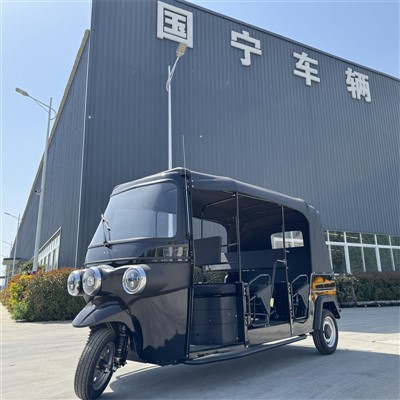

Transport tricycles have long been a common sight on roads around the world, especially in urban and semi - urban areas. As a supplier of Transport Tricycle, I've often been asked about the stability of these vehicles on the road. In this blog, I'll delve into the factors that affect the stability of transport tricycles and analyze whether they are truly stable.
1. Design and Structure
The design and structure of a transport tricycle play a crucial role in its stability. Unlike four - wheeled vehicles, tricycles have a unique triangular base. Generally, there are two main types of transport tricycles: the delta configuration (two wheels at the back and one at the front) and the tadpole configuration (two wheels at the front and one at the back).
Delta Configuration
Delta tricycles are more common in freight - carrying applications. The two rear wheels provide a stable base for the load. The weight of the cargo is distributed over these two wheels, which helps in maintaining balance. However, the single front wheel can be a point of vulnerability. When taking sharp turns, especially at higher speeds, there is a risk of the front wheel losing traction. This is because the centrifugal force acts on the vehicle, and the single front wheel may not be able to counteract it effectively.
Tadpole Configuration
Tadpole tricycles, on the other hand, have better steering stability. The two front wheels offer more control during turns as they can independently adjust to the road surface. This configuration is often used in more high - performance or sport - oriented tricycles. But when it comes to carrying heavy loads, the single rear wheel may face challenges. If the load is not evenly distributed, it can cause the rear wheel to lose grip, especially on slippery surfaces.
2. Load Distribution
Load distribution is another critical factor in determining the stability of transport tricycles. When the load is not evenly distributed, it can shift the center of gravity of the vehicle. A high center of gravity makes the tricycle more prone to tipping over, especially during sudden maneuvers or when going over bumps.
For example, if a transport tricycle is loaded with heavy goods on one side, it will create an imbalance. This imbalance can cause the tricycle to lean towards the loaded side, increasing the risk of a roll - over. As a supplier, we always recommend our customers to distribute the load evenly across the cargo area. This can be achieved by using proper packing techniques and ensuring that heavier items are placed closer to the center of the cargo area.
3. Speed and Maneuvering
The speed at which a transport tricycle is driven significantly impacts its stability. Higher speeds increase the forces acting on the vehicle, such as centrifugal force during turns and air resistance. When a tricycle is traveling at high speed and makes a sharp turn, the centrifugal force can cause the outer wheels to lift off the ground if the vehicle is not properly designed or loaded.


Moreover, sudden braking or acceleration can also affect stability. Abrupt braking can cause the weight of the vehicle and the load to shift forward, potentially causing the rear wheels to lose traction. Similarly, rapid acceleration can shift the weight to the rear, reducing the grip on the front wheels.
It is essential for drivers to maintain a safe speed, especially when carrying heavy loads or navigating through busy traffic. We also recommend smooth and gradual maneuvers to ensure the stability of the Transport Tricycle.
4. Road Conditions
The condition of the road surface has a direct impact on the stability of transport tricycles. Uneven roads, potholes, and slippery surfaces can all pose challenges. On uneven roads, the tricycle's wheels may experience different levels of force, which can cause the vehicle to shake or lose balance.
Potholes can be particularly dangerous as they can cause a sudden jolt to the tricycle. If the wheels hit a pothole at high speed, it can lead to a loss of control. Slippery surfaces, such as wet roads or roads covered in ice or snow, reduce the friction between the wheels and the road. This makes it easier for the wheels to skid, especially during turns or braking.
5. Comparison with Other Vehicles
When comparing transport tricycles with other types of vehicles, such as Electric Small Truck and Electrically Operated Tricycle, each has its own advantages and disadvantages in terms of stability.
Electric Small Trucks
Electric small trucks generally have better stability due to their four - wheel design. The four - wheel configuration provides a larger contact area with the road, which helps in distributing the weight more evenly. They are also less likely to tip over during sharp turns compared to tricycles. However, they may be less maneuverable in narrow spaces, which is an advantage of transport tricycles.
Electrically Operated Tricycles
Electrically operated tricycles are often used for lighter loads and shorter distances. They are more agile and can navigate through congested areas easily. But in terms of stability, they face similar challenges as traditional transport tricycles. The design and load - carrying capacity determine their stability on the road.
6. Safety Features and Improvements
To enhance the stability of transport tricycles, manufacturers are constantly incorporating various safety features. These include anti - lock braking systems (ABS), which prevent the wheels from locking up during braking, reducing the risk of skidding. Electronic stability control (ESC) systems are also being introduced in some high - end tricycles. These systems can detect when the vehicle is losing stability and automatically apply brakes to individual wheels or reduce engine power to help the driver regain control.
In addition, improvements in tire technology have also contributed to better stability. Tires with better grip and tread patterns can provide more traction on different road surfaces, reducing the risk of skidding.
Conclusion
In conclusion, the stability of transport tricycles on the road depends on a variety of factors, including design, load distribution, speed, road conditions, and safety features. While they do face some challenges compared to four - wheeled vehicles, with proper design, loading, and driving techniques, transport tricycles can be a stable and reliable mode of transportation.
As a supplier of Transport Tricycle, we are committed to providing high - quality products that are designed with stability in mind. We also offer training and advice to our customers on how to ensure the safe and stable operation of our tricycles.
If you are interested in purchasing transport tricycles or have any questions about their stability and performance, please feel free to contact us for further discussion and procurement negotiation. We look forward to working with you to meet your transportation needs.
References
- Smith, J. (2018). "Stability Analysis of Multi - wheeled Vehicles". Journal of Vehicle Engineering, 25(3), 123 - 135.
- Johnson, A. (2019). "Load Distribution and Its Impact on Vehicle Stability". Transportation Research, 32(2), 89 - 98.
- Brown, C. (2020). "Safety Features in Modern Tricycles". Automotive Technology Review, 18(4), 56 - 67.