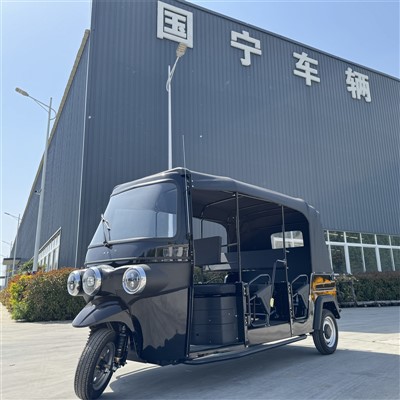

Are Freight Big Three Wheels energy - efficient?
As a supplier of Freight Big Three Wheels, I've been closely observing and analyzing the energy - efficiency aspect of these vehicles. In today's world, where environmental concerns and cost - effectiveness are at the forefront of business decisions, understanding the energy efficiency of freight transportation options is crucial.
Freight Big Three Wheels, also known as freight tricycles, have gained significant popularity in recent years. They are commonly used for last - mile delivery, small - scale freight transportation in urban areas, and even some rural logistics. One of the main reasons for their growing popularity is the potential for energy efficiency.
Let's first look at the design and mechanics of Freight Big Three Wheels. Compared to traditional large trucks, they are much smaller in size. Their compact design means less weight, which in turn requires less energy to move. A smaller vehicle has a lower frontal area, reducing air resistance. According to the laws of physics, air resistance is proportional to the square of the velocity and the frontal area of the vehicle. With a reduced frontal area, Freight Big Three Wheels can move through the air with less energy consumption, especially at lower speeds which are typical in urban delivery scenarios.
Another factor contributing to their energy efficiency is the type of power source. Many modern Freight Big Three Wheels are electrically powered. Electric motors are generally more efficient than internal combustion engines. Internal combustion engines waste a significant amount of energy as heat during the combustion process. In contrast, electric motors can convert a higher percentage of electrical energy into mechanical energy. For example, an average internal combustion engine may have an efficiency of around 20 - 30%, while an electric motor can achieve efficiencies of up to 90%. This means that for the same amount of energy input, an electric Freight Big Three Wheel can travel a longer distance compared to a gasoline - powered vehicle.
In addition, the regenerative braking system is often installed in electric Freight Big Three Wheels. When the vehicle brakes, the electric motor acts as a generator, converting the kinetic energy of the moving vehicle back into electrical energy. This energy is then stored in the battery and can be used later to power the vehicle. This feature further enhances the overall energy efficiency of the vehicle, as it recovers energy that would otherwise be wasted in traditional braking systems.
However, it's important to note that the energy efficiency of Freight Big Three Wheels also depends on several factors. The payload capacity is one such factor. If a Freight Big Three Wheel is overloaded, it will require more energy to move, reducing its energy efficiency. The terrain also plays a role. Uphill climbs demand more energy, while downhill descents can be used to recharge the battery through regenerative braking. The driving style of the operator also matters. Aggressive acceleration and braking can increase energy consumption, while smooth and consistent driving can optimize energy use.
Let's take a look at some real - world applications. In urban delivery services, Freight Big Three Wheels can be extremely energy - efficient. They can navigate through narrow streets and traffic - congested areas with ease, avoiding the long idling times that large trucks often face. This means less energy is wasted in stop - and - go traffic. For example, a delivery company using Electric Small Truck can make multiple stops in a small area without having to worry about the high energy consumption associated with larger vehicles.
The High Quality Chinese Stainless Steel Electric Tricycle is another example. Made of high - quality materials, it is designed to be both durable and energy - efficient. The stainless - steel construction reduces the weight of the vehicle while maintaining its strength, contributing to better energy efficiency.
The 1.1m Electric Tricycle Cargo Bike is also a great option for small - scale freight transportation. Its compact size and efficient electric motor make it suitable for short - distance deliveries in urban and suburban areas. It can carry a reasonable amount of cargo while consuming relatively little energy.
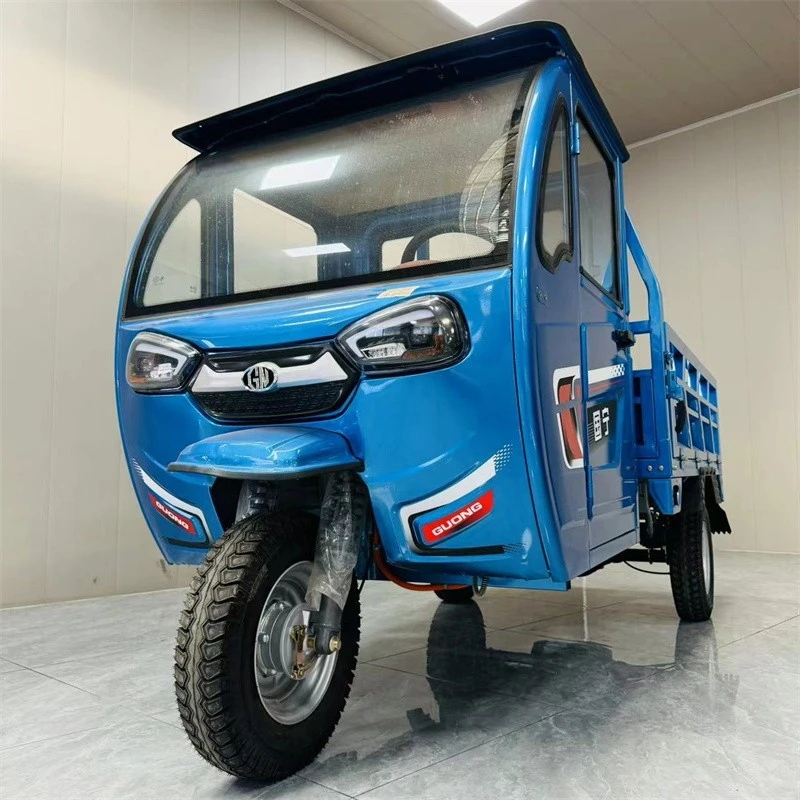

In conclusion, Freight Big Three Wheels have the potential to be highly energy - efficient. Their design, power source, and features such as regenerative braking all contribute to their energy - saving capabilities. However, to fully realize their energy - efficiency potential, proper management of payload, terrain, and driving style is necessary.
If you are in the market for a freight transportation solution that is both cost - effective and environmentally friendly, Freight Big Three Wheels could be the answer. Whether you are a small business owner looking for a reliable last - mile delivery option or a logistics company aiming to reduce your carbon footprint, our range of Freight Big Three Wheels can meet your needs. We invite you to contact us for more information and to discuss your specific requirements. Let's work together to find the most energy - efficient freight solution for your business.
References
- "Fundamentals of Vehicle Dynamics" by Thomas D. Gillespie. This book provides in - depth knowledge about the mechanics of vehicle movement, including factors affecting energy consumption.
- "Electric Vehicle Technology Explained" by John Hayes. It offers detailed information on the working principles of electric motors and their efficiency compared to internal combustion engines.